
Resección de tumores cerebrales guiada por fluoresceína: luz para el cirujano
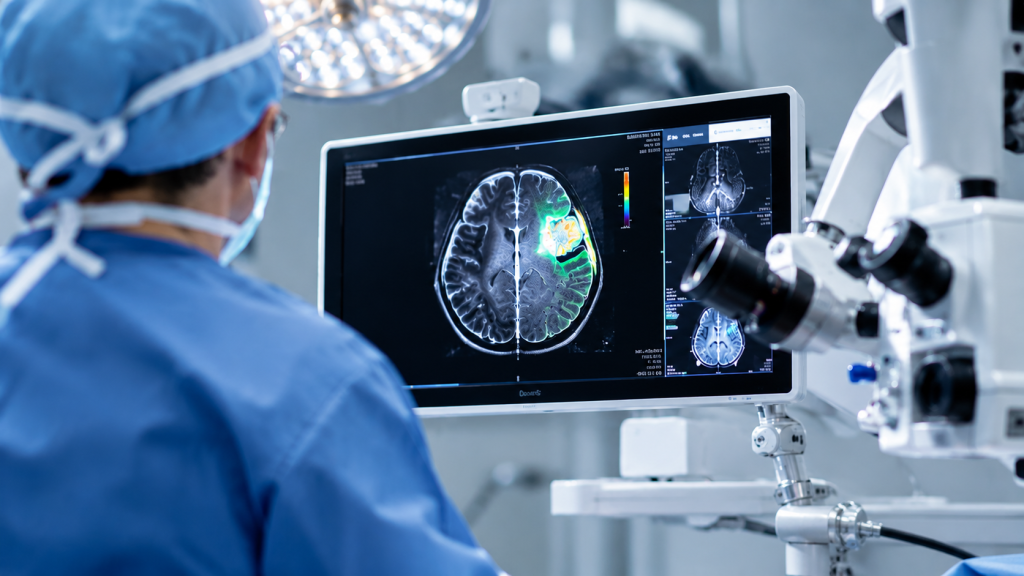
La cirugía de los tumores cerebrales exige combinar precisión y prudencia. Durante una intervención, el neurocirujano debe identificar el tejido que desea extirpar y, al mismo tiempo, preservar las estructuras que intervienen en funciones tan importantes como el movimiento, el lenguaje o la sensibilidad. La fluoresceína sódica es una herramienta que puede aportar información visual […]
Cirugía robótica: máxima precisión en intervenciones de columna
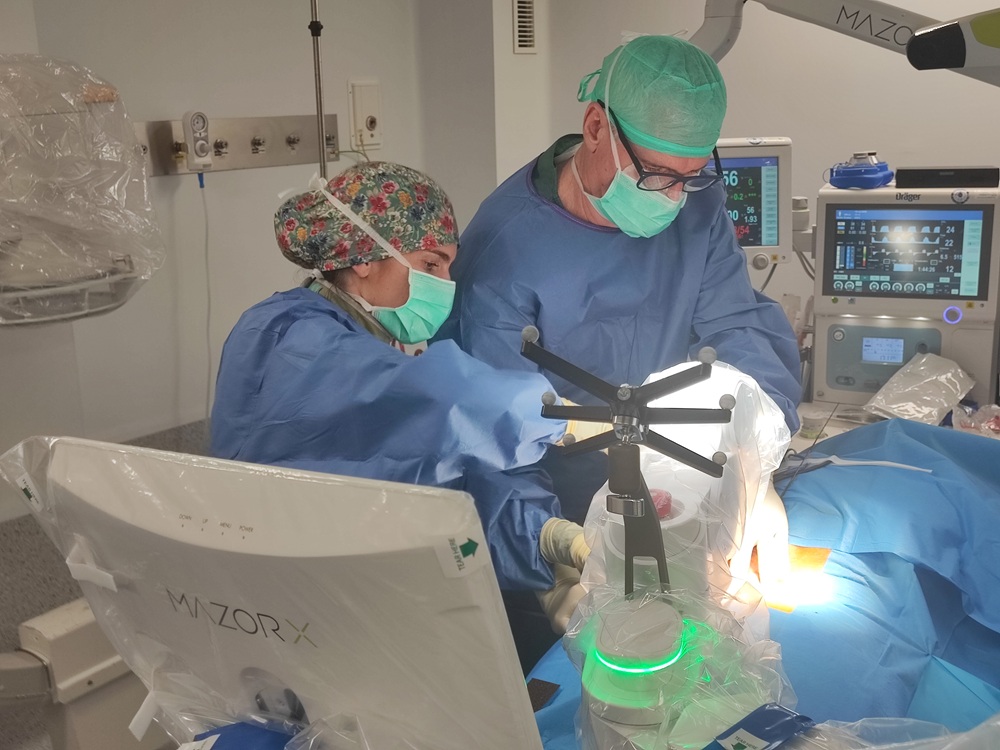
La cirugía de columna ha experimentado una evolución extraordinaria en las últimas décadas. La incorporación de sistemas de planificación tridimensional, navegación y asistencia robótica permite afrontar determinadas intervenciones con un grado de precisión que resulta especialmente valioso cuando es necesario colocar implantes cerca de estructuras nerviosas. En este contexto, la tecnología no sustituye al neurocirujano: […]
Hemifacial Spasm: Causes and Treatment Options
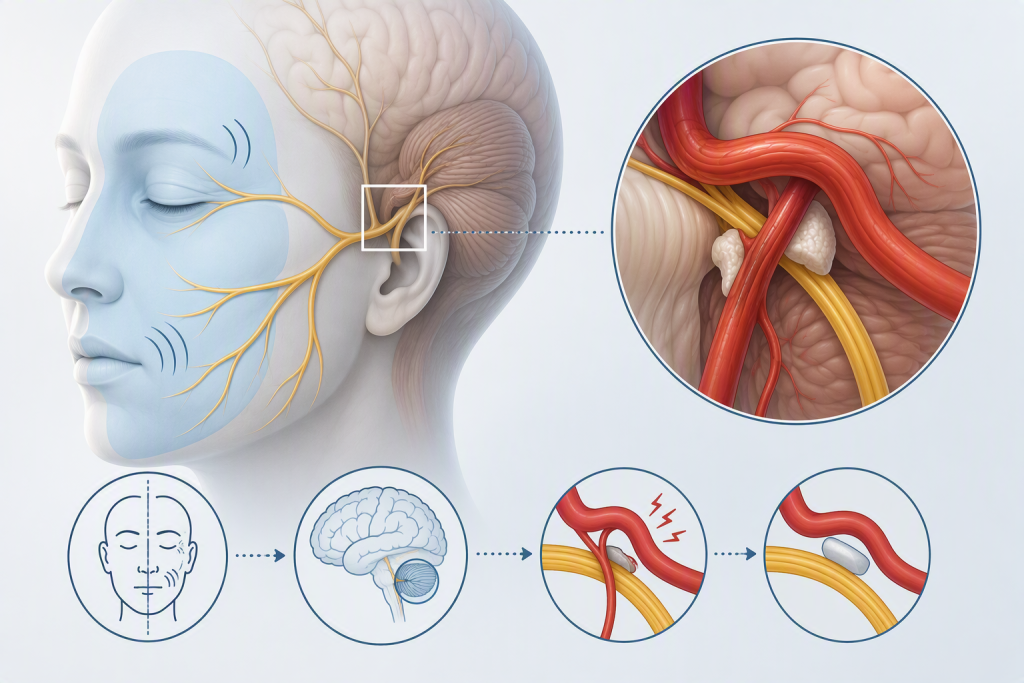
Hemifacial spasm is a neurological disorder that causes involuntary and repetitive contractions in the muscles of one side of the face. Although in its early stages it can manifest as a slight tremor around the eye, over time it can spread to the cheek, mouth, and even the neck, eventually affecting […]
Skull Base Surgery: Pushing the Boundaries of Neurosurgery
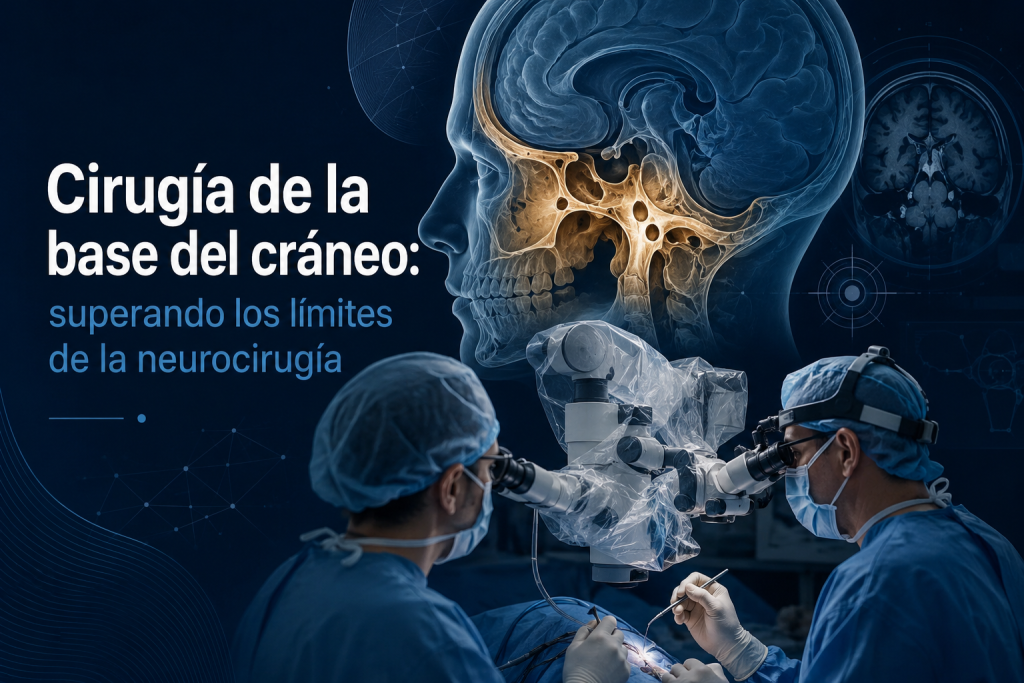
The base of the skull is one of the most complex and delicate regions of human anatomy. It is the bony structure that separates the brain from the sinuses, orbits, ears, and cervical spine. Vital arteries, major draining veins, and the twelve pairs of […]
Feed your brain: the link between diet and neurological health
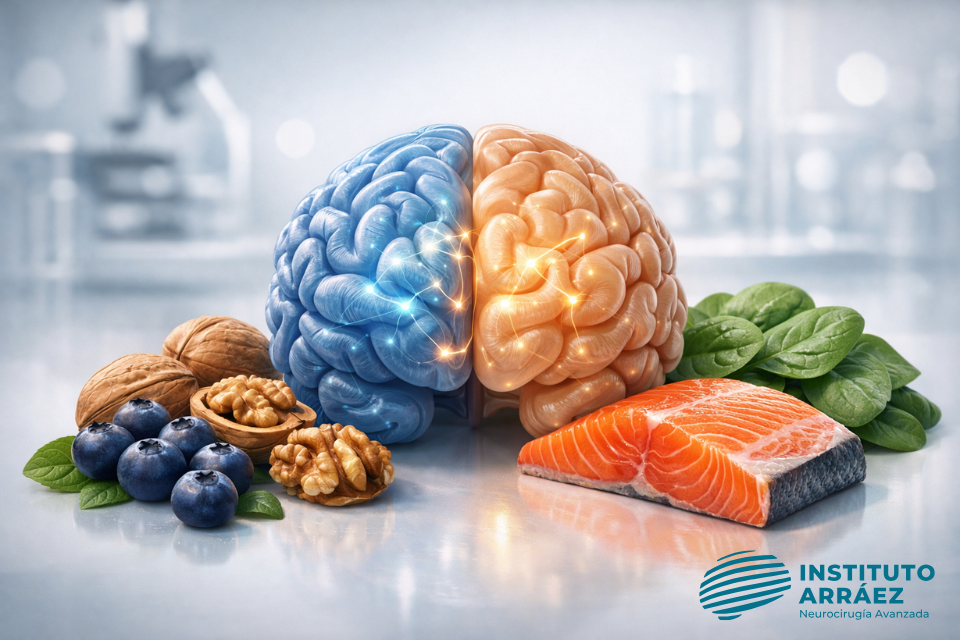
The health of the central nervous system is not an isolated event from lifestyle habits, but rather the result of constant interaction between genetics and the environment. Within the latter, nutrition emerges as one of the fundamental pillars for the preservation of cognitive reserve and the prevention of neurodegenerative pathologies. […]
Lumbar disc herniation: when is surgery the best option?
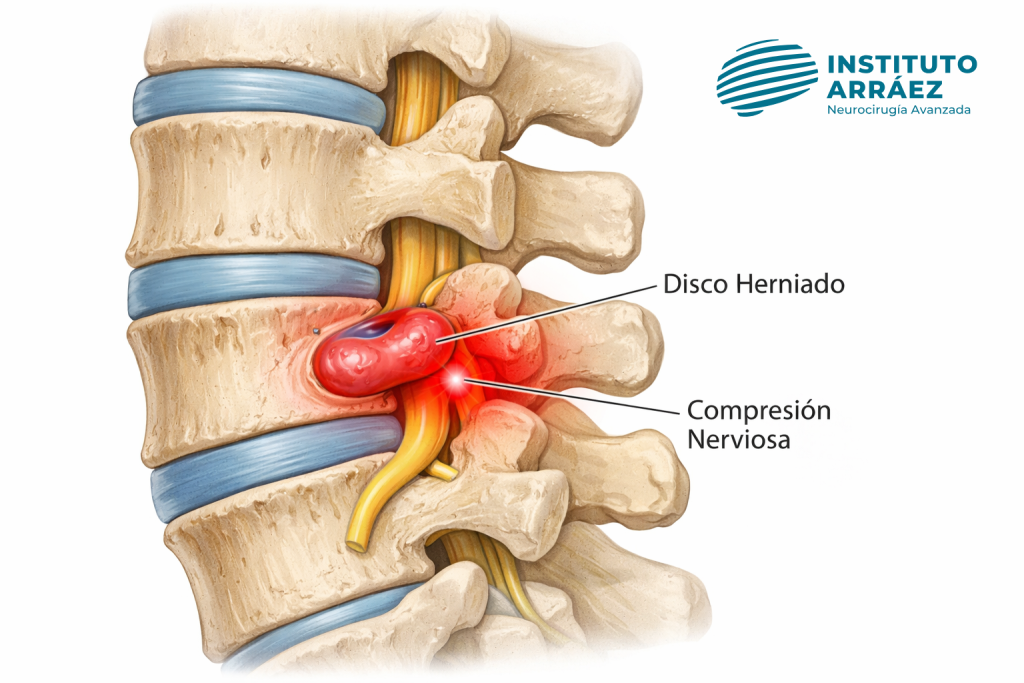
Low back pain radiating to the leg (sciatica) is one of the most frequent reasons for neurosurgical consultation. In a significant number of cases, a lumbar disc herniation is the cause. Throughout my professional career, I have observed that, while many patients improve with conservative treatment, there is a group for whom [...]
Brain Tumour Surgery: Cutting-Edge Techniques in Malaga

The diagnosis of a brain tumour has a profound impact on both the patient and their family. In over forty years dedicated to neurosurgery, I have witnessed the enormous evolution in the treatment of these conditions, especially in the surgical field. For more than [...]
5 daily habits that protect the brain and improve memory
In this post, we will explain how the brain, the most complex organ in the human body, is fundamental to all our cognitive, emotional, and physical functions. Keeping it healthy is crucial for a good quality of life, especially as we age. Fortunately, there are simple daily habits that, backed by neuroscience, can contribute significantly to [...]
Robotic spine surgery: what it is and what results it offers

In this post, we will explain how robotic spine surgery represents a significant advancement in the field of neurosurgery, offering improved precision and safety compared to traditional procedures. This cutting-edge technology allows surgeons to perform complex interventions with millimetre-level accuracy, resulting in better […]
Endoscopic technique in pituitary tumours: advantages and recovery
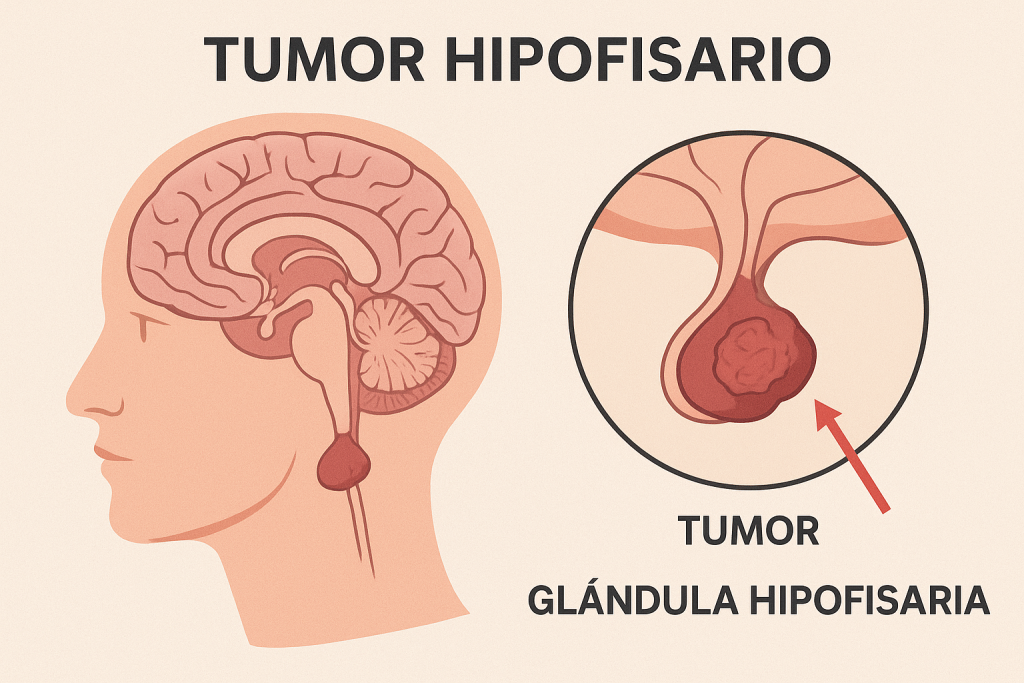
Today we will discuss how endoscopic techniques have revolutionised the surgical approach to pituitary tumours, offering a minimally invasive alternative to traditional surgery. This procedure allows neurosurgeons to access the pituitary gland via the nasal passages, avoiding cranial incisions and significantly reducing surgical trauma. The evolution of this [...]