
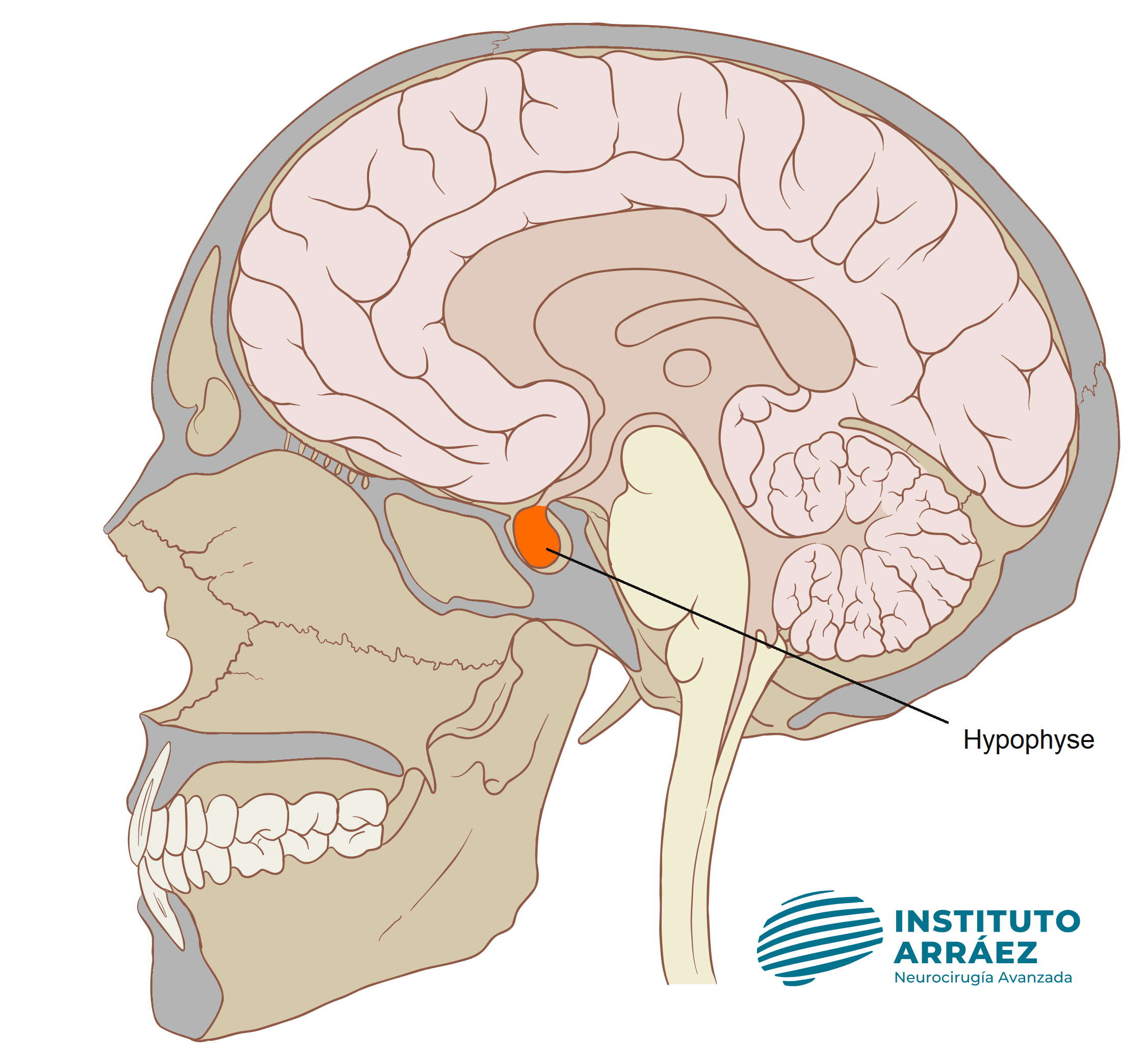
The diagnosis of a pituitary tumor often causes significant concern in patients, especially considering it is a small but functionally important brain structure. Throughout my career as a neurosurgeon, I have treated numerous cases of pituitary pathology, confirming that early diagnosis and an appropriate surgical approach lead to excellent outcomes.
At Arráez Institute, we address the Pituitary tumors in Malaga From a multidisciplinary perspective, combining surgical expertise, advanced technology, and comprehensive endocrinological assessment.
What is the pituitary gland and what types of tumors can affect it?
The pituitary gland is an endocrine gland located at the base of the skull, in a bony cavity called the sella turcica. Despite its small size, it regulates multiple essential hormonal functions, including growth, metabolism, thyroid function, adrenal function, and reproductive function, among others.
Pituitary tumors are usually benign adenomas, although can cause significant alterations due to:
- Excessive hormonal production (prolactin, growth hormone, ACTH).
- Compression of neighboring structures, especially the optic nerve.
- Persistent headache.
The diagnosis is based on hormonal studies and high-resolution magnetic resonance imaging. Not all tumors require immediate surgery; some can be managed medically or with periodic monitoring.
However, when there is visual commitment, progressive growth, or significant hormonal alterations, the pituitary tumor surgery in Malaga becomes the most effective therapeutic option.
Endoscopic Transsphenoidal Surgery: Technique of Choice
Currently, the most commonly used surgical approach is the Endoscopic surgery transsphenoidal. This technique allows access to the tumor through the nasal passages, without the need for external cranial incisions.
Among its main advantages are:
- Minimally invasive surgery.
- Reduction of hospital stay.
- Faster recovery.
- High rate of tumor control.
The key to success lies in the experience of the surgical team and precise planning based on detailed imaging studies. At the Arráez Institute, we have systems for neuronavigation that allow for precise tumor localization, increasing the safety of the procedure.
The goal is always twofold: to remove the tumor and preserve normal hormonal function as much as possible.
In conclusion, pituitary tumors are common and treatable pathologies when addressed in a specialized manner. Surgical experience and an individualized approach make a difference in the outcomes.
If you experience symptoms such as visual disturbances, unexplained hormonal changes, or persistent headaches, it is advisable to undergo a specialized evaluation. If you have been diagnosed with a pituitary tumor, schedule a consultation with me at Arraez Institute in Málaga to receive an expert, personalized assessment.