
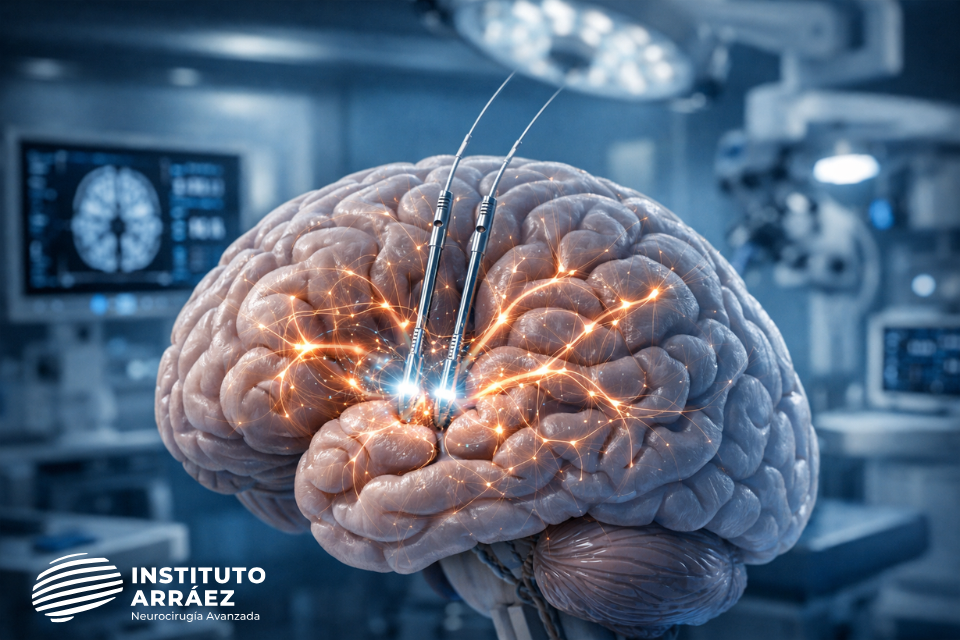
A cerebral aneurysm is a localized dilation or bulging in the wall of an intracranial artery. This protrusion, similar to a small balloon, occurs due to structural weakness in the muscular layer of the blood vessel. Although many aneurysms can remain asymptomatic throughout life, the main risk lies in their potential rupture, which causes a subarachnoid hemorrhage, a medical emergency of extreme severity. At the Arráez Institute, which I have the pleasure of directing, we have the necessary expertise and technology for the comprehensive management of this complex vascular pathology.
The incidence of cerebral aneurysms in the general population is estimated to be around 2–3%. Most are detected incidentally during imaging tests performed for other reasons, such as chronic headaches or dizziness. However, when an aneurysm ruptures, the symptoms are sudden and devastating, characterized by the «worst headache of one’s life,» nausea, vomiting, neck stiffness, and loss of consciousness.
Risk factors and detection methods for aneurysms
The formation and growth of a brain aneurysm depend on a combination of genetic and environmental factors. Identifying individuals at higher risk is fundamental for establishing follow-up protocols and preventive treatment.
- Modifiable and Non-Modifiable Risk Factors
Among the most significant risk factors are smoking and uncontrolled high blood pressure. Both weaken arterial walls and increase hemodynamic pressure on vascular bifurcations, where aneurysms typically originate. Other factors include excessive alcohol consumption, the use of stimulant drugs, and a family history of brain aneurysms (especially if two or more first-degree relatives have been affected).
- Advances in diagnostic imaging
At Arráez Institute, we have the most precise diagnostic tools for the detection and characterization of aneurysms. Magnetic Resonance Angiography (MRA) and Computed Tomography Angiography (CTA) allow for non-invasive visualization of vascular anatomy in great detail. However, the «gold standard» remains Digital Subtraction Cerebral Angiography, a minimally invasive procedure that provides dynamic information about blood flow and the exact morphology of the aneurysm, which is essential for planning the therapeutic strategy.
Endovascular treatment vs. surgical clipping in Malaga
Once an aneurysm is diagnosed, the decision to treat it and the choice of technique depend on multiple factors: the size, location, and shape of the aneurysm, as well as the patient's age and general health. There are two main approaches, and at our center in Malaga, We customize the choice for each individual case.
- Surgical Clipping: The Ultimate Solution
Microsurgical clipping is a classic and highly effective technique. It involves performing a craniotomy to access the aneurysm and placing a small metal clip on its neck, permanently isolating it from blood circulation. This technique is especially useful for aneurysms with complex morphologies, those located at arterial bifurcations, or when the patient presents with hemorrhage with a mass effect requiring evacuation. The main advantage of clipping is its very low long-term recurrence rate.
- Endovascular treatment: minimally invasive
Endovascular treatment (coiling or flow diverter stent embolization) is performed via a catheter, usually inserted through the femoral artery in the groin. The neurosurgeon navigates through the blood vessels to reach the aneurysm and fills it with platinum coils to induce thrombus formation and seal it. In cases of wide-necked aneurysms, Special stents that redirect blood flow away from the aneurysmal sac can be used.. This technique avoids opening the skull and is usually associated with a faster recovery.
In the Arráez Institute, the choice between one technique or another is based on an exhaustive analysis of the risks and benefits. We have state-of-the-art hybrid operating rooms that allow for the combination of both modalities if necessary, ensuring maximum patient safety.
Conclusion: The Importance of Specialization
The management of cerebral aneurysms requires high specialization and a multidisciplinary team with extensive experience in vascular neurosurgery. Early detection of an unruptured aneurysm allows for the planning of a scheduled intervention with controlled risks, avoiding the potentially fatal consequences of spontaneous rupture.
If you have a family history of aneurysms or have vascular risk factors, preventive screening can save your life. At Instituto Arráez, we are committed to offering you the technical excellence and human care that your brain health deserves.