
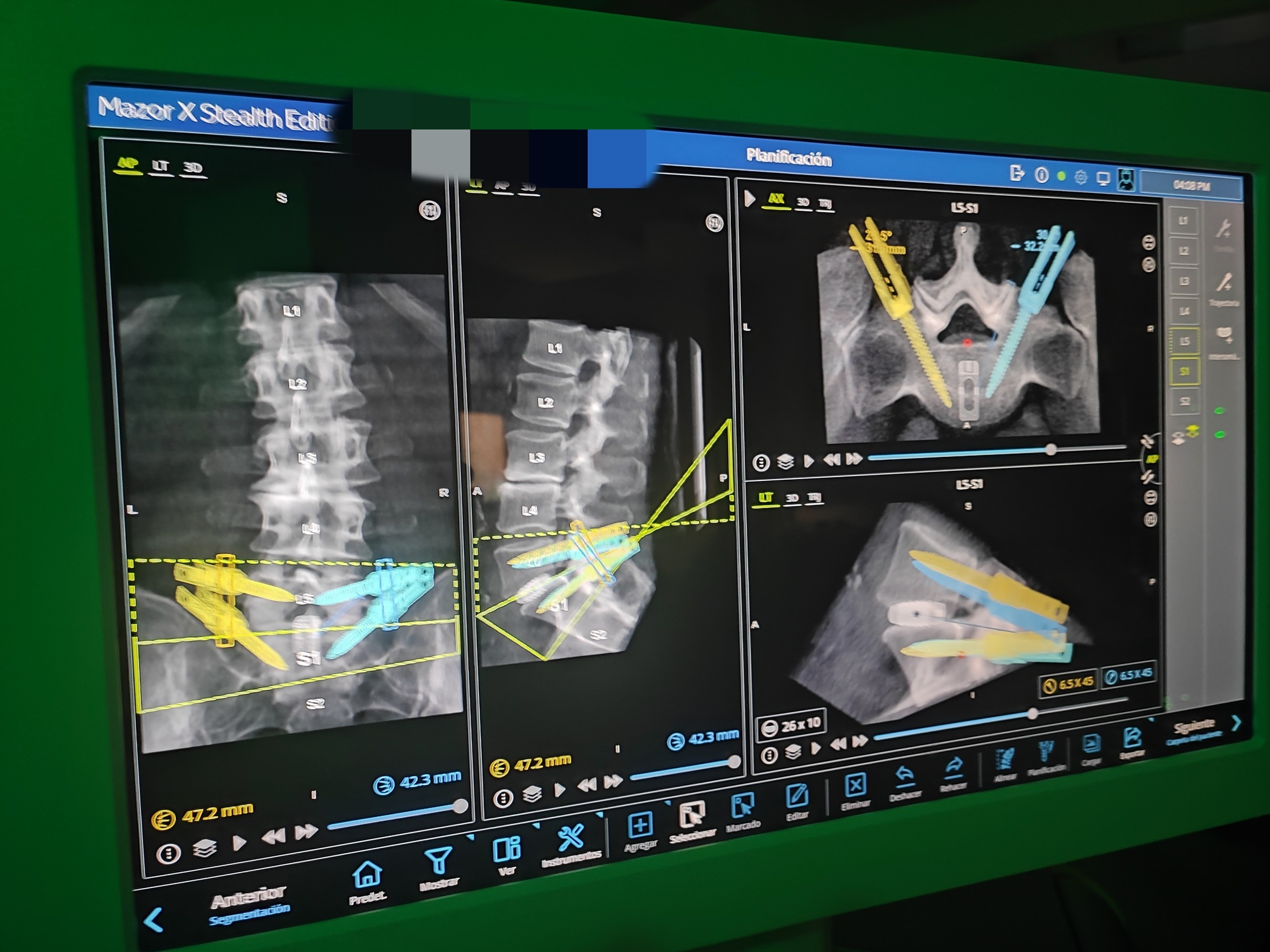
In this post, we will explain how robotic spine surgery represents a significant advancement in the field of neurosurgery, offering improved precision and safety compared to traditional procedures. This cutting-edge technology allows surgeons to perform complex interventions with millimeter-level accuracy, resulting in better patient outcomes and a faster recovery. The integration of robotics in spine surgery not only optimizes the surgical process but also minimizes the impact on the patient, marking a milestone in the evolution of spinal treatments.
Robotic spine surgery is a minimally invasive surgical technique that uses robotic arms and advanced imaging to assist surgeons in performing spinal procedures with greater precision.
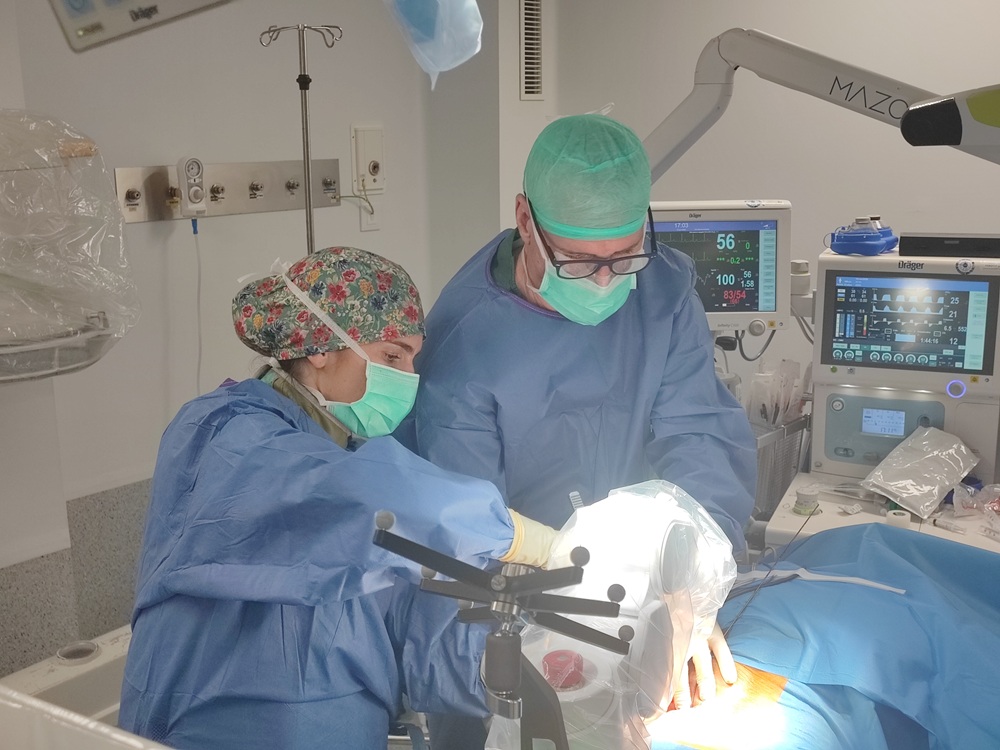
Robotic spine surgery involves the use of a computer-assisted robotic system that guides surgical instruments during the procedure. Contrary to the popular image of a robot operating autonomously, in reality, the surgeon maintains full control at all times. The robot acts as a high-precision tool, providing increased stability and accuracy in the placement of implants, performing osteotomies, or navigating delicate spinal anatomical structures. Before surgery, a detailed three-dimensional plan of the patient is created using medical imaging (CT scans or MRIs). During the operation, the robotic system uses this plan to guide the surgeon's instruments with sub-millimeter precision, ensuring that each movement is performed exactly as designed.
The key components of a robotic spine surgery system typically include:
- Robotic arm: an articulated arm that holds and positions surgical instruments with extreme precision.
- Navigation system: An optical or electromagnetic tracking system that monitors the position of instruments and patient anatomy in real time.
- Surgeon Console: where the surgeon controls the robot and views the surgical field in 3D and high definition.
- Planning software: allows the surgeon to plan the exact trajectory of instruments and implant placement before surgery.
Differences compared to traditional surgery
The differences between robotic spinal surgery and traditional surgery are substantial and manifest in several key aspects:
- Incision size Traditional surgery often requires larger incisions to allow the surgeon direct visualization and manual access to the spine. In contrast, robotic surgery is minimally invasive, meaning much smaller incisions are made (often only a few centimeters). This reduces surgical trauma and damage to surrounding muscles and tissues.
- Accuracy While traditional surgery relies heavily on the surgeon's manual skill and experience, robotic surgery adds a layer of computer-assisted precision. The robot can maintain an exact position and trajectory, which is especially critical in placing pedicle screws or performing decompressions near vital neural structures. This minimizes the risk of errors and improves patient safety.
- Visualization In traditional surgery, visualization can be limited. Robotic systems, however, offer an enlarged, three-dimensional view of the surgical field in real-time, allowing the surgeon greater clarity and control throughout the procedure.
- Blood loss Due to smaller incisions and increased precision, robotic spine surgery is often associated with less intraoperative blood loss compared to open procedures.
- ERadiation exposure: although both types of surgery may require the use of fluoroscopy (real-time X-rays), robotic surgery often allows for a reduction in radiation exposure for both the patient and the surgical staff, as the robotic system can guide instruments with less need for repeated imaging.
Benefits for the patient
The advantages of robotic spine surgery for patients are numerous and translate directly into a better postoperative experience and outcomes. At the Arráez Institute, we have found that they include:
- Faster recovery: As a minimally invasive procedure, tissue trauma is reduced, allowing patients to recover more quickly and return to their daily activities in a shorter period of time.
- Shorter hospital stay: Accelerated recovery often means patients can be discharged from the hospital in less time, reducing costs and the risk of nosocomial infections.
- Significant reduction in postoperative pain: Smaller incisions and less tissue damage are associated with less pain after surgery, which reduces the need for strong pain medications and improves patient comfort.
- Lower risk of complications: The robot's millimeter-level precision reduces the risk of damaging adjacent neural or vascular structures, resulting in a lower rate of intraoperative and postoperative complications.
- Less blood loss: As previously mentioned, the robot's precision helps to minimize bleeding during surgery.
- Smaller, more aesthetically pleasing scars Minimal incisions result in less visible scars, which is a significant aesthetic benefit for many patients.
- Greater confidence in the outcome Detailed preoperative planning and precise robot-assisted execution increase both the surgeon's and the patient's confidence in the success of the procedure.
Latest clinical results
Recent clinical studies and experience gained at leading centers show that robotic spine surgery offers promising results in the treatment of various spinal conditions. It has been shown to be effective in:
- Herniated discs Robotic precision facilitates minimally invasive microdiscectomy.
- Spinal stenosis Decompression is performed more safely and accurately.
- Scoliosis and other spinal deformities: The precise placement of screws and correction of curvature benefit greatly from robotic assistance.
- Vertebral Fractures Stabilization with implants is performed with greater accuracy.
- Spinal tumors: Robotic precision benefits tumor resection and spinal stabilization.
Patients treated with robotic spine surgery experience significant improvements in function, reduced pain, and increased overall satisfaction. The trend is towards increasing adoption of this technology as more surgeons are trained in its use and systems become more accessible and sophisticated.
Accuracy and safety
Precision is, without a doubt, one of the main advantages of robotic surgery. The robotic system allows for detailed preoperative planning and precise execution of the surgery, minimizing the risk of errors and improving patient safety. The ability to perform movements with sub-millimeter accuracy is crucial in such a delicate region as the spine, where proximity to the spinal cord and nerves requires the utmost caution.
Faster recovery
Thanks to the minimally invasive nature of robotic surgery, patients experience a faster and less painful recovery. This translates to less pain medication use, early mobilization, and an earlier return to daily and work activities. The reduction in downtime is a significant benefit to the patient's quality of life and their social and professional reintegration.
At Arráez Institute, we are at the forefront of neurosurgery, and we invite you to request a consultation with our robotic surgery specialists to evaluate your case and offer you the most advanced and safe solutions for your spinal health.